
Heroes of Mavia Alliance Wars

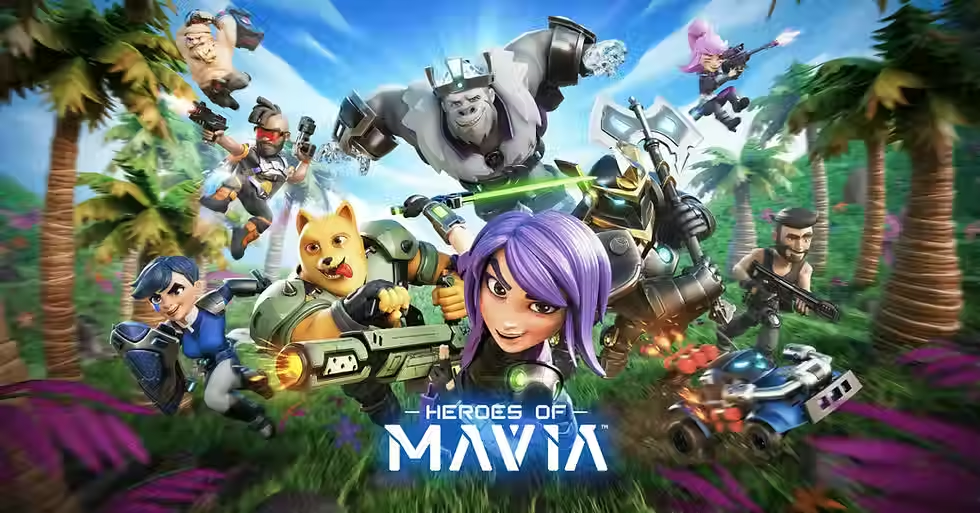
Heroes of Mavia has officially entered a new era of competitive gameplay with the launch of Alliance Wars Season 1. After more than a year of anticipation, players can finally join forces with their alliance members, battle for territory, and compete for seasonal rankings in what is easily the game's biggest multiplayer feature to date.
Rather than introducing another standalone PvP mode, Alliance Wars expands the entire competitive experience by putting teamwork, coordination, and long-term strategy at the center of the action. It's a milestone that fulfills one of the most important promises on the game's roadmap while reinforcing Heroes of Mavia's vision of becoming one of the leading Blockchain games in the Web3 gaming space.
If you've been waiting for a reason to rally your alliance, this is it.
Alliance Wars Finally Arrives
Alliance Wars has been one of the most requested features since it first appeared on the Heroes of Mavia roadmap in early 2025. Now, the feature is officially live, allowing alliances to compete against one another in large-scale seasonal warfare.
Instead of battling individually, players now work together as part of an organized alliance. Every member contributes toward the alliance's overall success, making teamwork just as important as individual skill.
Season 1 marks the beginning of an ongoing competitive system where alliances will fight across multiple seasons, climb leaderboards, and establish themselves as the dominant force on the battlefield.
This isn't just another limited-time event—it has been designed as a permanent pillar of Heroes of Mavia's competitive ecosystem.
Territory Control Takes Center Stage
At the heart of Alliance Wars lies territorial conquest.
Each alliance competes to capture and defend battle zones across a large strategic map. Every controlled territory contributes toward an alliance's seasonal progress, encouraging members to coordinate attacks and prioritize key objectives.
The Alliance Wars interface provides players with valuable information, including:
Alliance member statistics
Total alliance points
Seasonal rankings
Battle zone ownership
Historical performance
Battle replay functionality
One particularly interesting addition is the ability to spectate teammates in real time or watch replays of previous battles. These features encourage collaboration, help players improve their strategies, and strengthen the social aspect of the game.
Rather than simply grinding battles independently, every attack now contributes to a larger campaign shared by the entire alliance.
Team Strategy Matters More Than Ever
Alliance Wars represents a natural evolution of Heroes of Mavia's competitive philosophy.
The game has always emphasized skill-based competition over endless grinding. Existing modes like Ruby Battles already challenged players by placing them in mirrored conditions, where both competitors attacked the same Ghost Base using identical troop compositions.
Victory depended on factors such as:
Star count
Overall destruction percentage
Fastest completion time
Alliance Wars expands that same philosophy onto a much larger scale.
Instead of individual scores determining victory, alliances must coordinate attacks, allocate resources wisely, and plan collectively throughout the season. Success depends not only on strong attackers but also on communication and teamwork.
The result is a competitive environment where organization becomes just as valuable as combat skills.
Heroes of Mavia Continues Expanding
For newcomers, Heroes of Mavia remains one of the more accessible Web3 strategy games available today.
Inspired by classic base-building games, players construct and upgrade their islands, recruit powerful Heroes, train armies, and launch raids against rival players to collect valuable resources.
Available on:
iOS
Android
PC
Heroes of Mavia follows a free-to-play model that welcomes both traditional gamers and blockchain enthusiasts alike.
Unlike many blockchain titles that place token speculation at the forefront, Mavia focuses primarily on gameplay. Seasonal competitions, ranked modes, tournaments, and strategic progression form the backbone of the experience, while blockchain features remain optional enhancements rather than mandatory requirements.
This design philosophy has helped position the game among the more approachable Blockchain games for players curious about Web3 without sacrificing familiar strategy mechanics.
NFTs and Web3 Features Support Ownership
While gameplay comes first, Heroes of Mavia still offers meaningful blockchain integration.
The game's economy gives players ownership over valuable in-game assets through NFTs.
Some of the major Web3 features include:
NFT land ownership
Base NFTs
NFT crafting
Land trading
Land rental opportunities
These systems allow players to truly own certain assets instead of merely licensing them within a closed gaming ecosystem.
Landowners have also received ongoing utility beyond simple ownership, with options like renting land to other players adding another layer to the game's economy.
This combination of traditional gameplay with optional blockchain functionality continues to distinguish Heroes of Mavia from many earlier play-to-earn projects.
Understanding the MAVIA and Ruby Economy
Heroes of Mavia operates using a dual-currency economy designed to separate governance from everyday gameplay.
MAVIA serves as the ecosystem's primary governance and utility token. Built on Ethereum, it powers broader ecosystem functionality beyond the game itself.
Meanwhile, Ruby functions as the in-game currency earned through active gameplay.
Ruby is used throughout competitive modes, including Ruby Battles, where players stake Ruby in skill-based matches. Each battle applies a small burn fee, helping regulate the in-game economy while rewarding successful competitors.
The developers have also completed the migration from Ruby 1.0 to Ruby 2.0, reflecting ongoing efforts to refine the game's long-term economic sustainability.
Rather than relying on a single token for every aspect of the ecosystem, Heroes of Mavia separates gameplay rewards from governance responsibilities, creating a more balanced economic structure.
The Ecosystem Keeps Growing Beyond One Game
Skrice Studios has ambitions that extend beyond Heroes of Mavia itself.
The team initially launched the Mavia Marketplace & Exchange before expanding the platform into Nexira DAEP, a broader digital asset exchange platform intended to support additional blockchain games and ecosystem services.
This infrastructure aims to create a connected environment where digital assets can move across multiple experiences rather than remaining tied to a single title.
It's a clear indication that Heroes of Mavia serves as the foundation for a much larger Web3 gaming ecosystem currently under development.
Alliance Wars Marks a Major Milestone
The arrival of Alliance Wars Season 1 represents much more than a content update.
It demonstrates that Skrice Studios is delivering on one of its biggest roadmap commitments while continuing to invest in long-term gameplay systems instead of short-lived events.
By introducing alliance-wide objectives, territorial warfare, seasonal rankings, and deeper strategic cooperation, Heroes of Mavia significantly expands its competitive landscape without abandoning the game-first philosophy that has guided development from the beginning.
For veteran players, Season 1 offers an entirely new reason to organize with their teammates and compete for dominance. For newcomers, there's never been a better time to jump into the battlefield, join an alliance, and experience one of the most ambitious updates Heroes of Mavia has released so far.


Comments