
GTA 6 Is Redefining Open World Games

Rockstar Games is once again preparing to push the boundaries of open-world gaming. During a recent extended media presentation, Rockstar North studio co-head Rob Nelson guided journalists through a deeper look at Grand Theft Auto 6, revealing a huge collection of mechanics, systems, and world-building details.
Set in a reimagined Vice City, GTA 6 appears determined to make its world feel less like a backdrop and more like a living ecosystem. For players interested in blockchain games, this evolution is particularly interesting because many of the systems Rockstar is experimenting with—dynamic economies, player choices, character progression, and persistent activities—are becoming increasingly important across modern Web3 gaming.
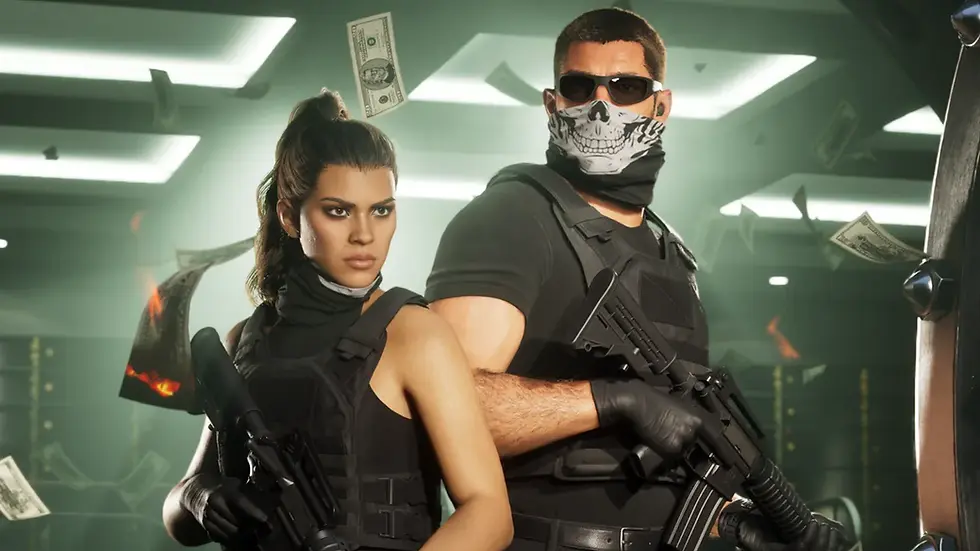
Jason and Lucia Share the Spotlight
One of GTA 6's biggest changes is the relationship between protagonists Jason and Lucia.
Players can switch between the two characters while exploring the open world, although certain story missions can temporarily restrict this option. When playing as one character, players can also contact the other by phone and ask them to participate in activities or help during shootouts.
Interestingly, building their relationship isn't mandatory. Players can spend time together by shopping, exercising, exploring, or even planning robberies, but these interactions are optional.
Safehouses add another layer to their relationship. Similar to the camp system in Red Dead Redemption 2, these locations give Jason and Lucia a shared home while allowing each character to maintain their own schedule.
This approach could make GTA 6 feel much more dynamic than traditional open-world games.
Vice City Rewards Curious Players
Rockstar appears to be putting considerable effort into making exploration worthwhile.
The pause screen reportedly provides detailed satellite imagery and information that can help players understand the surrounding environment. Random encounters can also appear, including suspicious NPCs and unexpected situations that encourage players to investigate rather than simply follow mission markers.
A new Focus system further supports exploration by highlighting points of interest.
Even the smartphone has received a major change. Instead of functioning purely as a HUD interface, the phone is now a physical object that characters visibly pull from their pockets.
Small details like this may seem insignificant individually, but together they can dramatically increase immersion.
For blockchain games, creating this type of persistent and interactive world is also becoming increasingly important. Players want digital environments where exploration and interaction feel meaningful rather than simply decorative.
Character Progression Gets More Physical
GTA 6 is also bringing back physical-stat mechanics, but Rockstar is giving them a new twist.
Going to the gym can increase a character's muscularity, while overeating can increase weight. Interestingly, gaining weight can also provide health benefits.
This creates another system where everyday decisions can influence gameplay.
Rather than forcing players into a traditional RPG-style skill tree, GTA 6 appears to integrate progression directly into the world. Want a stronger character? Hit the gym. Want to change your appearance? Adjust your lifestyle.
It is a relatively simple concept, but it contributes to the idea that Jason and Lucia are actual people living inside Vice City rather than avatars waiting for the next mission.
Six-Star Wanted Levels Change the Chase
Rockstar is also expanding one of GTA's most recognizable mechanics: the wanted system.
GTA 6 reportedly introduces a six-star wanted level, creating more escalation and requiring players to think carefully about how they escape.
Police behavior is also becoming more sophisticated. Officers can track suspects based on physical appearance and clothing, meaning simply jumping into another vehicle may no longer be enough to disappear.
Players may need to change their entire outfit or use disguises to reduce attention.
This creates an interesting stealth layer within the traditionally chaotic GTA formula.
Suddenly, escaping from the police isn't simply about driving fast. Players need to think about visibility, disguises, routes, vehicles, and timing.
Stealing Cars Becomes More Strategic
Vehicle theft is another area receiving a major overhaul.
Cars are reportedly divided into different categories, with specific vehicles requiring particular tools to steal. Players may need equipment such as slim jims or key cloners depending on the target.
Stolen vehicles and goods can then be sold through fences, creating a more interconnected criminal economy.
That system could make money management considerably more important.
Instead of treating every stolen car as an immediate source of cash, players may need to consider the risks involved, the equipment required, the value of the vehicle, and where it can be sold.
This is exactly the kind of interconnected economic design that has become increasingly interesting in the blockchain gaming sector, where player-driven economies and digital ownership are often central concepts.
Combat Doesn't Always Have to End in Death
GTA 6 is also introducing more options for non-lethal combat.
Players can reportedly disarm opponents, perform non-lethal takedowns, or shoot limbs to end confrontations without necessarily killing everyone involved.
That gives players greater freedom in deciding how they approach encounters.
The Criminal Profile system takes this philosophy even further. Instead of forcing players into a straightforward good-versus-evil morality system, it tracks their general behavior and influences how the world responds to them.
This is an important distinction.
GTA has always been about player freedom, but GTA 6 appears interested in remembering how players use that freedom.
A World Built Around Consequences
Perhaps the most exciting takeaway from the presentation is how Rockstar is attempting to blur the boundary between story missions and ordinary open-world activities.
Choices made during seemingly insignificant moments can accumulate over time. Character relationships, criminal behavior, exploration, and other decisions could influence how players experience the broader narrative.
That philosophy encourages replayability.
Two players might follow the same broad storyline while creating very different experiences through their choices and behavior.
For Web3 gaming, this direction is worth watching closely. The strongest blockchain games increasingly focus on persistent worlds where player actions, economies, progression, and communities interact with each other.
GTA 6 Could Set a New Open-World Standard
With deeper character systems, more reactive police behavior, physical progression, a more sophisticated criminal economy, and an enormous amount of environmental detail, GTA 6 is shaping up to be much more than another massive map.
Rockstar seems focused on making Vice City feel alive.
Lucia's backstory, Jason's relationship with her, random encounters, disguises, vehicle theft, criminal behavior, and even seemingly mundane activities all contribute to a world designed around interconnected systems.
That could ultimately become GTA 6's biggest achievement.
The game isn't simply giving players more things to do. It is attempting to make those things matter.
And if Rockstar successfully connects all these mechanics into one coherent experience, GTA 6 could establish a new benchmark for open-world design—one that both traditional developers and blockchain game studios will be studying for years to come.



Comments