
1666 Amsterdam Revives Classic Magic

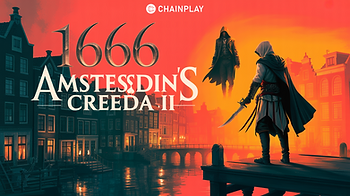
Few game announcements have generated as much curiosity among longtime Assassin’s Creed fans as 1666 Amsterdam. Developed by the team behind some of the most beloved entries in the franchise—Assassin’s Creed II, Brotherhood, and Revelations—the game already carries a certain level of expectation.
After spending around thirty minutes with the newly released prologue, one thing becomes clear: 1666 Amsterdam isn’t trying to impress players with explosive action or massive open-world features right away. Instead, it focuses on mystery, atmosphere, and storytelling. And for many players, that approach feels like a welcome return to form.

A Familiar Storytelling Formula That Still Works
One of the first things players will notice is how familiar the narrative structure feels.
Fans of the Ezio trilogy will immediately recognize the setup. The story unfolds across multiple timelines, introducing different characters whose lives appear disconnected at first but gradually reveal deeper connections. It’s a storytelling technique that helped make Assassin’s Creed memorable during its golden years.
Rather than overwhelming players with exposition, the prologue focuses on creating intrigue. Questions are raised faster than answers are given, encouraging players to keep digging deeper into the mystery.
For a game aiming to capture the spirit of classic historical adventures, this is a strong opening move.
Three Characters Across Three Different Eras
The prologue introduces players to three central characters:
Noa, living in 17th-century Amsterdam
Aaron, whose story takes place in 1999
Clio, a character from the modern era
None of these protagonists receive a complete introduction. Instead, each serves as a piece of a larger puzzle.
Noa immediately stands out thanks to her mysterious, almost witch-like presence. She establishes the supernatural undertones that run throughout the story while remaining firmly rooted in the historical setting.
Aaron and Clio remain more enigmatic. Their limited screen time leaves many unanswered questions, but that appears intentional. The developers clearly want players speculating about how these timelines connect before revealing the larger picture.
Amsterdam Becomes a Character of Its Own
One of the biggest strengths of the prologue is its setting.
Historical authenticity helped establish the identity of early Assassin’s Creed games, and 1666 Amsterdam appears determined to follow that tradition. The recreation of 17th-century Amsterdam feels carefully crafted rather than simply serving as a backdrop for gameplay.
The city’s:
Narrow streets
Detailed architecture
Foggy atmosphere
Distinct historical identity
all combine to create an environment that feels believable and lived-in.
Many modern games rely on generic fantasy worlds or familiar open-world templates. By contrast, Amsterdam immediately stands out as a location with its own personality and history.
This attention to detail gives players a reason to explore beyond the main story and demonstrates why historical settings continue to be so compelling in gaming.
Supernatural Elements Are Handled With Restraint
Introducing supernatural themes into a historical setting is always a delicate balancing act.
Go too far, and the historical immersion disappears. Hold back too much, and the supernatural aspects feel irrelevant.
The prologue manages this balance surprisingly well.
The witchcraft-inspired elements surrounding Noa never overshadow the world itself. Instead, they feel naturally woven into the beliefs, fears, and culture of the era.
This approach echoes what made the Ezio trilogy successful. Those games presented conspiracies and ancient mysteries, but they always grounded players in a believable historical world first.
So far, 1666 Amsterdam seems to understand that lesson.
The Unexpected Star of the Prologue Is a Cat
While the historical sections are impressive, the most memorable gameplay moments come from an unexpected source.
Players eventually take control of a cat during Aaron’s timeline.
At first glance, comparisons to the popular game Stray are unavoidable. Both games place players in the role of a feline navigating unusual environments.
However, 1666 Amsterdam quickly establishes its own identity.
Instead of focusing on exploration and companionship, these sections lean heavily into psychological tension and unease. Players move through eerie locations like hotels and libraries while the environment twists and distorts around them.
The result is an experience that feels significantly darker than anything seen in Stray.
Cat-Kour Creates a Unique Horror Experience
The movement mechanics themselves are surprisingly enjoyable.
Running, climbing, jumping, and navigating obstacles as a cat creates a distinct gameplay loop that feels both fluid and immersive. The developers have even embraced what fans are already calling "cat-kour."
What makes these sections particularly effective is the atmosphere.
Every hallway, room, and corner feels slightly wrong. The environment constantly creates uncertainty, making players question what is real and what is not.
Rather than relying on jump scares or combat encounters, the game generates tension through environmental storytelling and visual distortion.
It’s easily the strongest gameplay concept introduced in the prologue and one that could become a defining feature of the full release.

The Prologue Shows Promise Despite Technical Issues
Like many early previews, the prologue isn't without flaws.
Players will encounter:
Frame rate drops
Performance hiccups
Unpolished animations
Technical rough edges
Fortunately, these issues don't overshadow the overall experience.
At this stage, the prologue feels less like a polished product and more like a statement of intent. The developers are demonstrating the direction they want to take while gathering feedback from the community.
Given the experience of the team behind the project, there's reason to believe these technical concerns can be addressed before launch.
Why 1666 Amsterdam Should Be on Every Story-Driven Gamer's Radar
The most impressive achievement of the prologue is that it leaves players wanting more.
Just as the relationship between Noa and Aaron begins to develop, the experience ends. While frustrating in the moment, it is also a sign that the narrative has successfully captured players’ attention.
Whether the final game can deliver satisfying answers remains to be seen. But based on this early glimpse, the foundation is promising.
For fans of rich historical worlds, layered mysteries, and character-driven storytelling, 1666 Amsterdam already feels like a spiritual successor to the classic era of Assassin’s Creed.
And as gaming continues to evolve across both traditional and decentralized ecosystems, players looking for the latest developments in blockchain games and innovative gaming experiences will want to keep a close eye on projects that prioritize strong storytelling alongside new technology.
The prologue may only last thirty minutes, but it successfully accomplishes its primary goal: making players eager to uncover what happens next.


Comments